Coca-Cola
Ma Rainey's Black BottomCoca-Cola is more than a refreshment in Ma Rainey’s Black Bottom: during the recording session, Ma Rainey makes it a condition of her singing, and her insistence exposes the unequal terms on which her voice is being recorded. When the studio has failed to provide it, she stops the planned performance, rejects pressure to proceed without it, and sends members of the band to buy three bottles. The small object makes a larger dispute tangible: the company wants Ma’s voice on record, while Ma insists that the people controlling the session must also meet her stated terms.
A Required Provision in the Studio
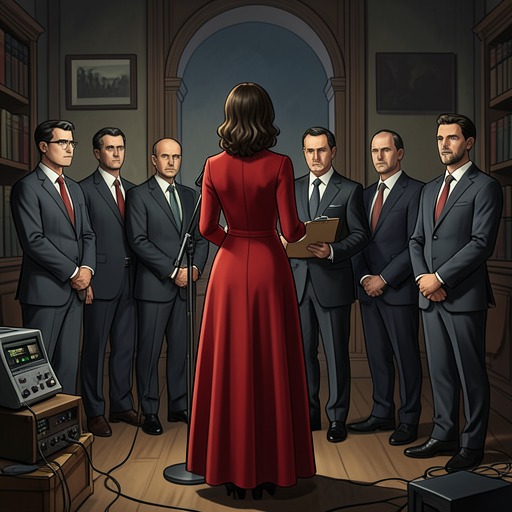
The demand takes place in the upstairs recording studio, where the performers are assembled and the control booth connects the people managing the recording to those making the music. Sturdyvant, speaking over the studio speaker, has already tried to direct the performance, asking Ma to shorten the introduction and come in sooner. Ma rebuffs the instruction and asks where her Coca-Cola is. The exchange establishes that the drink is not an incidental request made after the work is done: Ma brings it into the negotiation over how the work will proceed.
Irvin says he forgot it and asks the band to do the song without it. Sturdyvant also says there is none at the studio and presses to continue. Ma refuses. She insists that she will not sing without Coca-Cola, rejecting the assumption that the session’s schedule or the musicians’ readiness should override her requirement. Her insistence halts a recording setup that Irvin describes as ready to go, making the missing drink a practical obstacle the people directing the session must address rather than an inconvenience Ma must silently accept.
The Errand and the Interrupted Session
When Irvin offers to call a deli, Ma does not simply accept his proposed solution. She says that if he is too cheap to buy her a Coke, she will buy her own, and directs Slow Drag and Sylvester Brown to go with Slow Drag to get it. She specifies three bottles from the store on the corner and tells the others to wait until she has them. The errand gives her demand an immediate consequence: the recording pauses, Irvin and Sturdyvant leave for the hallway, and the band members depart from the studio area to obtain what she has requested.
The trip takes longer than Ma expects. When Slow Drag and Sylvester Brown return with the Cokes, she remarks that the corner store should not have taken so long; Slow Drag explains that it was closed and they had to find another one. Ma then tells Sylvester Brown to find Irvin and inform him that they are ready. The sequence ends not with the drink remaining a private matter, but with its arrival marking the point at which Ma is willing to resume the work. The bottles have held up the session, and their delivery allows the performers to signal readiness on Ma’s terms.
Coca-Cola as a Measure of Respect
Ma connects the request to a wider complaint about the people who record and manage her. She points out that Coca-Cola costs only a nickel a bottle, yet the people who want to capture her voice have not bothered to provide it. In her account, the refusal is evidence of how they treat her: they want what she can earn for them, but do not show comparable care toward her as a person. She says that the recording machines will preserve her voice while the company has little use for her once it has obtained what it wants.
This complaint is sharpened by Ma’s claim that her records have earned the company more money than its other recording artists’ records put together. The contrast is not simply between a valuable singer and a cheap drink. It is between the value her work creates and the company’s reluctance to spend even a small amount on a provision she has made a condition of participating. Coca-Cola therefore becomes a modest but visible measure of the respect Ma believes she is owed. Her demand does not give her control of the recording apparatus, but it lets her interrupt the process and insist that the session acknowledge her terms.
The Drink Beside the Recording Technology
The play places this dispute within a studio organized around technical mediation. A microphone carries the performance into the recording system, and Sturdyvant listens from the control booth while giving directions through a speaker. Ma’s Coca-Cola, by contrast, is an ordinary physical provision that must be fetched from outside the studio. The difference matters: the equipment is ready to capture her voice, but the people operating the session have neglected something she has explicitly asked them to supply.
The session later encounters a separate technical failure. Sturdyvant announces that the song has not been recorded, and Irvin identifies a chewed-up microphone cord that needs replacing. The damaged cord, not the missing Coca-Cola, is given as the reason the recording failed. Still, the episodes set human demands and technical arrangements alongside one another: Ma can stop the performance over the missing drink, while the recording itself remains dependent on equipment that can fail without preserving what the musicians have done. In that contrast, Coca-Cola is neither a recording tool nor a cure for the studio’s disorder. Its importance lies in what Ma’s insistence makes visible: the session cannot treat her voice as a commodity to be captured while ignoring the conditions she sets for lending it.